BLOG
What is a Marketplace Integration and How Does it Work?
By Darren DeFeo | Updated on January 16, 2026
Marketplace Integrations for Modern Dropshipping Businesses
Marketplace integration is one of the most critical — and most misunderstood — components of a successful dropshipping business. While many new retailers focus on product selection, pricing, or advertising, the underlying systems that determine how dropshipping actually works ultimately decide whether a business can scale profitably or collapses under operational strain.
At its core, a marketplace integration establishes a direct, automated connection between an ecommerce store and external platforms such as suppliers, wholesalers, shipping carriers, and online marketplaces. This connection allows retailers to connect a store to suppliers in real time, eliminating the need for manual product uploads, inventory tracking, order placement, and shipping updates.
Without marketplace integration, every part of a dropshipping operation becomes slower, more error-prone, and increasingly difficult to manage as order volume grows. With proper integration, dropshipping businesses can operate with speed, accuracy, and scalability that would otherwise be impossible.
What Is a Marketplace Integration?
A marketplace integration is a technical connection that synchronizes data between two or more systems involved in ecommerce transactions. These systems typically include:
- The retailer’s ecommerce platform (such as Shopify or WooCommerce), where choosing the right ecommerce platform directly impacts how integrations, automation, and scaling will function long term
- One or more online marketplaces (such as Amazon, eBay, or Walmart)
- One or more online marketplaces (such as Amazon, eBay, or Walmart), which impose strict requirements when selling across online marketplaces at scale
- Wholesale suppliers or distributors
- Shipping and fulfillment providers
Through this integration, product data, inventory levels, pricing, orders, tracking information, and fulfillment status are exchanged automatically. The goal is to ensure that every system involved in a transaction is always working with accurate, up-to-date information.
Marketplace integration transforms dropshipping from a manual, reactive business into a system-driven operation.
How Marketplace Integrations Work (In Simple Terms)
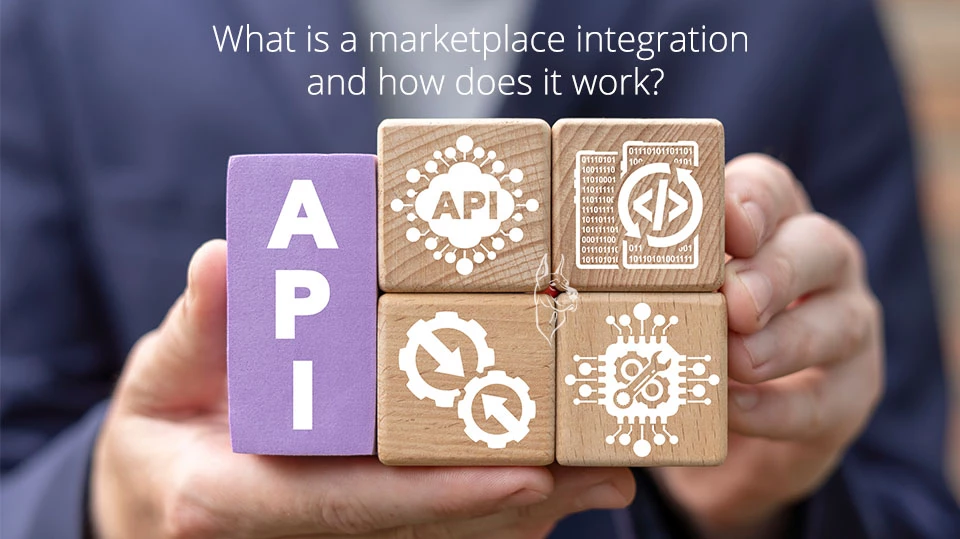
Marketplace integrations rely on APIs, or Application Programming Interfaces. An API is a structured way for two software systems to communicate with each other securely and reliably, forming the backbone of automation in dropshipping.
In a dropshipping context, APIs allow:
- A supplier’s inventory system to “talk” to your store
- Your store to send paid orders to suppliers automatically
- Suppliers to return tracking and fulfillment updates to your store
- Marketplaces to receive accurate inventory and shipping data
When a customer places an order on your site, the integrated system automatically:
1. Confirms the product is in stock
2. Sends the order details to the supplier
3. Triggers fulfillment and shipping
4. Updates the customer with tracking information
5. Adjusts inventory across all connected channels
This entire process happens without manual intervention, which is critical when scaling a dropshipping business across multiple products, suppliers, and sales channels.
Why Marketplace Integrations Matter in Dropshipping
Many dropshipping businesses fail not because of poor marketing or bad products, but because their backend systems cannot keep up with growth. Understanding why many dropshipping businesses fail often reveals that operational breakdowns—not demand—are the root cause.
Eliminating Manual Work
Without integration, retailers must manually:
- Upload product listings
- Update inventory
- Place supplier orders
- Enter tracking information
- Resolve inventory discrepancies
As order volume increases, manual workflows quickly become unsustainable.
Preventing Overselling and Stock Errors
Real-time inventory syncing ensures customers cannot purchase items that are out of stock. This depends heavily on supplier inventory accuracy, which reduces cancellations, refunds, negative reviews, and marketplace penalties.
Improving Customer Experience
Accurate listings, fast fulfillment, and reliable tracking information create a smoother buying experience — a critical factor for repeat customers and brand trust.
Marketplace Integration vs Manual Dropshipping
Manual dropshipping can work at very low volumes, but it breaks down rapidly as complexity increases.
| Manual Dropshipping | Integrated Dropshipping |
|---|---|
| Manual product uploads | Automated product syncing |
| Delayed inventory updates | Real-time inventory sync |
| Manual order placement | Automated order routing |
| High error rates | Reduced operational risk |
| Difficult to scale | Built for scale |
Marketplace integration is not a “nice to have” feature — it is the infrastructure layer that supports long-term growth. Businesses that rely on automated dropshipping operations are better equipped to handle inventory changes, order volume spikes, and multi-channel complexity.
Benefits of Marketplace Integration for Dropshipping Businesses
1. Operational Efficiency
Automation removes repetitive administrative tasks, allowing retailers to focus on marketing, pricing strategy, and customer acquisition.
2. Multi-Supplier Connectivity
Marketplace integrations allow a single store to connect to multiple suppliers simultaneously, expanding product selection without multiplying operational complexity.
3. Faster Order Fulfillment
Orders are transmitted instantly to suppliers, reducing processing delays and improving shipping times.
4. Centralized Order Management
Retailers gain a unified view of all orders, inventory levels, and fulfillment statuses across platforms and suppliers.
5. Scalability Without Chaos
As order volume grows, integrated systems maintain consistency and accuracy without requiring proportional increases in staff or manual labor. This is essential for scaling a dropshipping business without burning out as product catalogs, suppliers, and sales channels expand.
Marketplace Integrations and Supplier Management
Supplier reliability is one of the most significant variables in dropshipping success. Marketplace integrations play a vital role in mitigating supplier-related risk, especially when working with U.S.-based dropshipping suppliers that provide faster shipping, more accurate inventory data, and clearer fulfillment accountability.
Integrated systems allow retailers to:
- Monitor inventory accuracy
- Track fulfillment performance
- Identify problem suppliers early
- Reduce disputes and chargebacks
Rather than reacting to supplier issues after customers complain, integrated platforms provide visibility that enables proactive management.
The Role of Marketplace Integration in Multi-Channel Selling
Modern dropshipping businesses rarely rely on a single sales channel. Many sell across:
- Their own ecommerce website
- Marketplaces like Amazon and eBay
- Social commerce platforms
- B2B or wholesale portals
Marketplace integration ensures that inventory, pricing, and order data remain synchronized across all channels. Without integration, selling across multiple platforms dramatically increases the risk of overselling and policy violations.
Compliance and Marketplace Rules
Each marketplace enforces strict rules around inventory accuracy, shipping time disclosures, order tracking, customer communication, and cancellation rates. Understanding ecommerce compliance requirements early helps dropshipping businesses avoid account warnings, suspensions, and financial penalties as they scale.
- Inventory accuracy
- Shipping time disclosures
- Order tracking
- Customer communication
- Cancellation rates
Manual processes increase the likelihood of compliance failures. Integrated systems help ensure consistent data and automated updates that align with marketplace requirements.
For growing dropshipping businesses, integration is a compliance safeguard, not just an operational convenience.
Common Marketplace Integration Features
A robust marketplace integration typically includes:
- Product data management
- Inventory level synchronization
- Pricing updates
- Automated order routing
- Shipping and tracking updates
- Invoice and document handling
- Error and exception reporting
These features work together to create a cohesive, scalable operation.
Marketplace Integrations and Automation at Scale
Automation becomes exponentially more valuable as a business grows. What saves minutes at low volume saves hours or days at scale, which is why automation at scale is essential for maintaining accuracy, speed, and profitability as order volume increases.
Marketplace integrations allow businesses to:
- Handle higher order volume with the same team size
- Reduce operational costs per order
- Maintain accuracy during peak sales periods
- Expand product catalogs without additional complexity
This operational leverage is what separates professional ecommerce businesses from hobby-level stores.
Choosing the Right Marketplace Integration Platform
Not all integrations are created equal. When evaluating platforms, retailers should consider:
- Supplier vetting and reliability
- Supported marketplaces and platforms
- Inventory update frequency
- Order routing reliability
- Support and documentation
- Scalability limits
Platforms like TopDawg are designed specifically to solve these challenges by combining vetted suppliers, automated integrations, and centralized management into a single marketplace integration platform built for long-term scalability.
How Marketplace Integrations Support Long-Term Profitability
Profitability in dropshipping is not just about margins — it is about operational efficiency. Businesses that rely on manual processes incur hidden costs through errors, refunds, staff time, and lost opportunities.
Integrated systems improve profitability by:
- Reducing operational overhead
- Preventing costly mistakes
- Improving fulfillment speed
- Increasing customer retention
- Enabling sustainable growth
Common Misconceptions About Marketplace Integration
“Integration Is Only for Large Businesses”
In reality, integration is most valuable early, before operational debt accumulates.
“Manual Processes Are Cheaper”
Manual processes appear cheaper upfront but cost far more over time in errors and inefficiencies.
“Integration Limits Flexibility”
Modern integrations increase flexibility by enabling multi-channel expansion and supplier diversification.
Marketplace Integration as a Competitive Advantage
As ecommerce becomes more competitive, operational excellence is increasingly difficult to replicate. Marketplace integration provides a structural advantage that competitors relying on manual processes struggle to match.
Integrated businesses:
- Launch faster
- Scale more smoothly
- Handle complexity with ease
- Deliver more consistent customer experiences
Final Thoughts: Why Marketplace Integration Is Foundational
Marketplace integration is not a feature layered on top of a dropshipping business — it is the foundation upon which everything else operates. Marketing, pricing, branding, and customer service all depend on reliable systems beneath them.
Dropshipping businesses that invest in integration early build resilient, scalable operations capable of long-term success. Those that delay integration often find themselves trapped by manual work, errors, and growth ceilings that are difficult to escape.
Related Articles
The 101 On Dropshipping: All You Need to Know
Sell Products Made in the United States
Find Wholesale Product Distributors
Favorite Dropshipping Platform for Retailers and Wholesale Suppliers
How to Scale a Dropshipping Business in 2026 Without Burning Out
Introducing TopDawg’s New Amazon Dropshipping App: Now Part of the Amazon Provider Network
Dropshipping Explained: How It Works, Benefits, and Common Myths in 2026
Top 10 U.S.-Based Dropshipping Suppliers for 2026 (Ranked & Compared)
What to Consider When Starting an Ecommerce Business
Interested in Starting a Dropshipping Business?
If you are interested in starting a dropshipping business, please read TopDawg’s “Ultimate Guide to Launching a Successful Dropshipping Business.” This comprehensive guide aims to equip new dropshippers with the knowledge and tools to start and scale their business effectively. By incorporating a range of e-commerce platforms and emphasizing the selection of a dependable dropshipping partner like TopDawg, the guide provides a solid foundation for starting a dropshipping business and building a profitable online store.
Starting your online retail journey is the key to a prosperous business. At TopDawg, we facilitate your success by granting access to a broad array of wholesale dropshipping suppliers and a diverse range of the best dropshipping products. In addition, we deliver integrated store solutions, automated order processing, and effective shipping strategies, all focused on increasing your profitability.
🖋️ About the Author
Darren DeFeo is the CEO of TopDawg, a U.S.-based dropshipping platform that helps thousands of retailers streamline eCommerce operations with verified American suppliers and automated fulfillment. With 20+ years in digital commerce and product innovation, Darren focuses on building sustainable growth systems that help entrepreneurs scale with confidence.
When he’s not leading TopDawg, Darren is cultivating partnerships that keep retailers ahead of market shifts — especially in logistics, automation, and the evolving U.S. trade landscape.
🔗 Connect with Darren on LinkedIn
Frequently Asked Questions
Additional Resources






Create a Free Account to Get Started
Creating a free account only requires a valid email address, with no credit card needed.