BLOG
Find Wholesale Product Distributors
By David Oakes | Updated on March 4, 2025
How to Find Wholesale Product Distributors for Your Dropshipping Business
Finding wholesale product distributors for your ecommerce website is the bread and butter of your dropshipping business. If you do not have a consistent and reliable virtual inventory of products to sell at prices that are profitable to you and attractive to potential customers, you cannot be a successful online retailer.
Establishing Relationships with Wholesale Suppliers
You can spend days researching wholesale distributors, making phone calls, sending emails, completing qualification forms to try to get products for your ecommerce website. And that is the easy part. You’ll need to integrate your website with the wholesale distributors’ inventory systems, and align all the SKUs, descriptions and ordering system perfectly in order to have a seamless and functioning system.
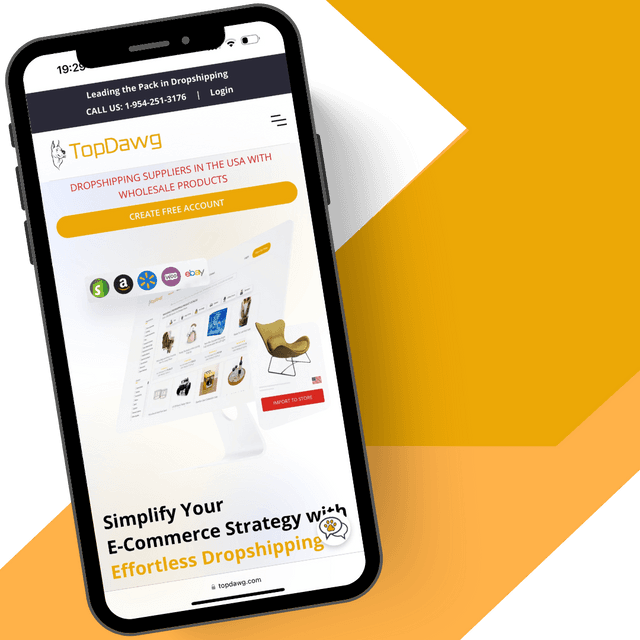
Or, you could go through an existing wholesale distributor connection service, such as TopDawg, to create a seamless integration between your ecommerce site and wholesale product distributors.
How to Vet Wholesale Product Distributors Before You Commit
Not all wholesale product distributors are created equal, and choosing the wrong partner can create fulfillment issues, customer complaints, and cash-flow problems. Before committing to a distributor, ecommerce retailers should evaluate supplier reliability, shipping locations, inventory accuracy, and return policies. U.S.-based distributors typically offer faster delivery times and lower risk compared to overseas suppliers, especially for customer-facing ecommerce brands.
A reputable wholesale distributor should provide consistent stock updates, accurate product data (dimensions, weights, descriptions), and clear communication channels. Retailers should also verify whether the distributor supports automation through APIs or integrations with ecommerce platforms like Shopify, WooCommerce, or marketplaces. Using a vetted wholesale distribution platform such as TopDawg helps eliminate these risks by pre-qualifying suppliers and standardizing product data across thousands of wholesale items.
Establishing Prices for Products on Your Ecommerce Site
Buying products from dropshipping wholesalers to fulfill customer orders and ship to your customers is part of a sequence of transactions that should occur to have satisfied customers. Before your customer taps the order button, they have already assessed the quality of the product they are buying on your site, and the price.
Setting prices can be challenging. If it is higher than the competition, you’ll lose business. If it is too low, you’ll lose profit. Understanding what your margins should be for each product is time consuming.
TopDawg removes the guesswork and time spent researching, because we’ve already done it for you. We have established wholesale pricing on more than 600,000 dropshipping products with wholesale suppliers. When you subscribe to TopDawg, our recommended price spreads offer competitive pricing for you, while also providing transparent information about your profitability and the margin on each item listed and sold. We save you time, while you make money.
Monitor Wholesale Distributor Product Quality
When you work with a reliable wholesale integrator, you can monitor your customer orders and see whether they return items or keep them, and recommend them to others. If you work directly with wholesale suppliers, it can sometimes be problematic to track returns and customer satisfaction if the ordering system is not fully integrated. With TopDawg, you have a fully transparent ordering and inventory system, as well as detailed ordering information that will help you knowledgeably speak with your customers about their order history.
Why Automation Matters When Working With Wholesale Distributors
Automation plays a critical role in scaling a dropshipping business that relies on wholesale product distributors. Manual processes — such as uploading product data, tracking inventory, submitting orders, and updating shipping information — increase the likelihood of errors and slow down order fulfillment. These inefficiencies can lead to overselling, delayed shipments, and poor customer experiences.
Modern wholesale distribution platforms provide automated inventory syncing, real-time pricing visibility, and streamlined order routing between retailers and suppliers. This allows ecommerce businesses to focus on marketing, customer acquisition, and brand growth rather than backend operations. By working with automated wholesale distributor networks, retailers reduce operational friction while maintaining accurate listings, competitive pricing, and faster order fulfillment across multiple sales channels.
Consider Using a Wholesale Distribution Platform
Rather than trying to establish relationships with wholesale distributors, consider using a dropshipping platform, like TopDawg, that connects your ecommerce site with wholesale products that are reday to dropship. It will save you time and ultimately, provide stable profit margins.
Interested in starting a dropshipping business?
If you are interested in starting a dropshipping business, please read TopDawg’s “Ultimate Guide to Launching a Successful Dropshipping Business.” This comprehensive guide aims to equip new dropshippers with the knowledge and tools to start and scale their business effectively. By incorporating a range of e-commerce platforms and emphasizing the selection of a dependable dropshipping partner like TopDawg, the guide provides a solid foundation for starting a dropshipping business and building a profitable online store.
Related Articles
Why Do Most Dropshippers Fail?
How to Scale a Dropshipping Business in 2026 Without Burning Out
Introducing TopDawg’s New Amazon Dropshipping App: Now Part of the Amazon Provider Network
Dropshipping Explained: How It Works, Benefits, and Common Myths in 2026
Shopify Dropshipping Success: How Automation & U.S. Suppliers Give You the Competitive Edge
How to Start a Dropshipping Business
Why TopDawg Ranks #1: What Makes It the Most Trusted U.S. Dropshipping Supplier
What is a Marketplace Integration and How Does it Work?
What to Consider When Starting an Ecommerce Business
Frequently Asked Questions
Additional Resources







Create a Free Account to Get Started
Creating a free account only requires a valid email address, with no credit card needed.