BLOG
Best U.S. Dropshipping Suppliers in 2026 (Top 7 Compared)
By Chelsea Hall | Updated on February 19, 2026

Best U.S. Dropshipping Suppliers in 2026 (Quick Overview)
The best U.S. dropshipping suppliers in 2026 include TopDawg, Modalyst, Sunrise Wholesale, Printful, Megagoods, Spocket, and Wholesale2B. These companies provide faster domestic shipping, improved marketplace compliance, real-time inventory management, and scalable integrations with major ecommerce platforms like Shopify, Amazon, and Walmart.
For retailers focused on reliability, reduced return rates, and stronger customer satisfaction, working with verified U.S.-based suppliers offers a competitive advantage over overseas sourcing. Below, we compare the top platforms based on product selection, shipping speed, integrations, and scalability to help you choose the right supplier for your business.
If you're new to ecommerce or still building your foundation, our complete step-by-step guide on how to start a dropshipping business in 2026 walks through niche selection, supplier setup, store creation, and automation strategies in detail.
Comparison of Top U.S. Dropshipping Suppliers
|
Supplier |
Best For |
Product Selection |
U.S. Warehouses |
Ecommerce Integrations |
Pricing Model |
Ideal Retailer Type |
|
TopDawg |
Multi-Channel U.S. Dropshipping |
Yes |
Shopify, Amazon, Walmart |
Subscription-based |
Growth-focused retailers |
|
|
Modalyst |
Boutique & Branded Products |
Curated supplier network |
Partial |
Shopify |
Free + Paid Plans |
Niche brand stores |
|
Sunrise Wholesale |
General Merchandise |
15,000+ products |
Yes |
Shopify, eBay |
Subscription-based |
Budget-conscious sellers |
|
Printful |
Print-on-Demand |
Custom-designed products |
Yes |
Shopify, Etsy |
Per-order pricing |
Creators & custom brands |
|
Megagoods |
Consumer Electronics |
Specialized catalog |
Yes |
Limited |
Subscription-based |
Tech-focused stores |
|
Spocket |
Mixed U.S. & EU Suppliers |
Large supplier network |
Partial |
Shopify, WooCommerce |
Tiered Plans |
Beginners & hybrid sellers |
|
Wholesale2B |
Aggregated Supplier Access |
1M+ products |
Yes |
Shopify, eBay, Amazon |
Subscription-based |
Marketplace sellers |
While each supplier offers distinct strengths, understanding why U.S. dropshipping suppliers are becoming the preferred model in modern ecommerce will help clarify which platform aligns best with your long-term business strategy.
Why U.S.-Based Dropshipping Suppliers Matter in 2026
In 2026, sourcing from U.S.-based dropshipping suppliers offers a significant competitive advantage over overseas alternatives. As customer expectations continue to rise and marketplace policies become stricter, domestic fulfillment has become more important than ever for ecommerce retailers.
Faster Shipping & Higher Customer Satisfaction
Modern consumers expect delivery within 2–5 business days. U.S.-based suppliers can meet these expectations more consistently than international suppliers, reducing refund requests, chargebacks, and negative reviews. Faster shipping directly impacts conversion rates and repeat purchases.
Improved Marketplace Compliance
Major ecommerce platforms such as Amazon and Walmart have tightened their performance requirements in recent years. Metrics like on-time shipping rate, valid tracking rate, and cancellation rate are closely monitored. If you plan to sell on Amazon, understanding how supplier integrations impact performance metrics is critical — especially when using an Amazon dropshipping supplier that supports real-time inventory syncing. Working with domestic suppliers helps retailers maintain stronger compliance and avoid account suspensions caused by long transit times or customs delays.
Reduced Return Complexity
Returns are easier to manage when products ship from within the United States. Domestic return processing reduces customer friction and lowers operational headaches compared to international returns, which often involve higher shipping costs and longer processing times.
Tariff & Supply Chain Stability
Global supply chain volatility and tariff fluctuations have made overseas sourcing less predictable. U.S.-based dropshipping suppliers offer greater stability in pricing, shipping timelines, and product availability — helping retailers maintain consistent margins and inventory flow.
Stronger Brand Trust
Consumers increasingly value transparency and domestic sourcing. Marketing products that ship from U.S. warehouses can enhance brand trust and reduce buyer hesitation, particularly for higher-ticket or time-sensitive purchases.
For ecommerce businesses focused on long-term scalability, compliance, and customer experience, partnering with verified U.S. dropshipping suppliers provides a more stable foundation for growth in 2026 and beyond.
How to Choose the Best U.S. Dropshipping Supplier
Selecting the right U.S.-based dropshipping supplier requires more than comparing product catalogs. In 2026, successful ecommerce retailers evaluate suppliers based on operational reliability, integration capabilities, shipping infrastructure, and long-term scalability. Below are the most important factors to consider before committing to a supplier partnership.
Product Quality & Supplier Vetting
High product quality directly impacts customer satisfaction, return rates, and brand reputation. Look for suppliers that vet manufacturers, maintain quality control standards, and provide accurate product descriptions and images. Requesting product samples before listing items can help ensure consistency.
Shipping Speed & Warehouse Location
Fast domestic shipping is one of the primary advantages of working with U.S.-based dropshipping suppliers. Confirm average processing times, warehouse locations, and tracking capabilities. Suppliers with multiple U.S. distribution centers often provide more reliable 2–5 day delivery windows.
Inventory Accuracy & Automation
Overselling and stockouts can lead to account warnings on platforms like Amazon and Walmart. Prioritize suppliers that offer real-time inventory syncing, automated order routing, and accurate stock updates to reduce operational risk. If you’re unfamiliar with how automation impacts fulfillment performance, our guide on how dropshipping orders work from checkout to delivery explains the full process step by step.
Marketplace & Platform Integrations
Integration capabilities determine how efficiently you can scale. Evaluate whether the supplier connects directly with ecommerce platforms such as Shopify, Amazon, Walmart, WooCommerce, or eBay. For a deeper comparison of selling channels — including differences in fees, customer behavior, and fulfillment workflows — see our Retailer Sales Channels guide, which highlights the strengths and weaknesses of each major platform. Seamless integrations reduce manual workload and minimize fulfillment errors.
Pricing Structure & Profit Margins
Review the supplier’s pricing model, including subscription fees, per-order costs, or tiered plans. Ensure that wholesale pricing allows sustainable gross margins after accounting for shipping, platform fees, and marketing expenses.
Scalability & Support Infrastructure
As your store grows, your supplier must handle increased order volume without compromising performance. Evaluate customer support responsiveness, fulfillment capacity, and dispute resolution processes before scaling aggressively.
Choosing a U.S.-based supplier that excels in these areas can significantly improve customer satisfaction, operational efficiency, and long-term profitability.
Top U.S. Based Dropshipping Suppliers in 2026
1. TopDawg – Best for Multi-Channel U.S. Dropshipping
Best For: Retailers selling across Shopify, Amazon, and Walmart
Product Selection: 500,000+ wholesale products
Strengths: Verified U.S. suppliers, real-time integrations, automated order routing
Considerations: Subscription-based membership model
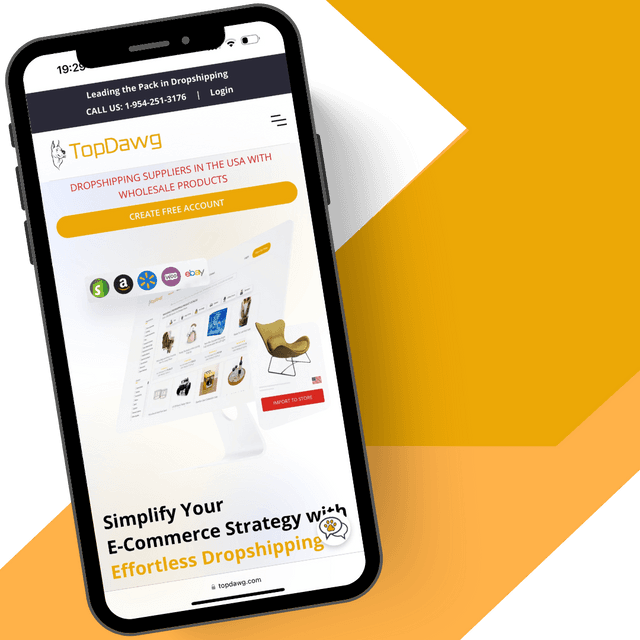
TopDawg is a U.S.-based dropshipping platform connecting retailers to more than 3,000 verified American suppliers. With over 500,000 wholesale products across categories like pet supplies, home goods, electronics, and fitness, it offers one of the largest U.S.-focused catalogs available.
What differentiates TopDawg is its multi-channel integration capabilities. Retailers can connect directly with Shopify, Amazon, Walmart, and WooCommerce for real-time inventory syncing and automated fulfillment. For sellers using WooCommerce, TopDawg's dedicated WooCommerce dropshipping integration guide explains how automation works step by step. This reduces overselling risk and improves marketplace compliance — critical factors for scaling in 2026.
Founded in 2004, TopDawg has grown into one of the largest U.S.-focused dropshipping platforms, serving retailers across multiple ecommerce channels.
2. Modalyst – Best for Boutique & Branded Products
Best For: Niche and brand-focused online stores
Product Selection: Curated supplier network
Strengths: Independent brands, unique products, Shopify integration
Considerations: Limited depth compared to large aggregators
Modalyst connects ecommerce retailers with curated U.S.-based and global suppliers, focusing heavily on boutique and branded products. It is particularly attractive for store owners looking to differentiate with unique inventory rather than compete solely on price.
The platform integrates smoothly with Shopify and offers both free and paid plans. Retailers focused on lifestyle brands, fashion, and specialty goods may find Modalyst appealing due to its emphasis on quality and design-forward suppliers.
3. Sunrise Wholesale – Best for General Merchandise
Best For: Budget-conscious sellers
Product Selection: 15,000+ products
Strengths: Established supplier, real-time inventory tracking, marketplace integrations
Considerations: Smaller catalog compared to large platforms
Sunrise Wholesale has been operating in the dropshipping industry for years and provides access to thousands of products across electronics, home décor, gifts, and general merchandise categories. The platform supports integrations with major ecommerce systems and offers inventory tracking tools.
For sellers looking for a straightforward subscription-based supplier with broad general merchandise coverage, Sunrise Wholesale remains a reliable option.
4. Printful – Best for Print-on-Demand
Best For: Custom apparel and branded merchandise
Product Selection: Custom-designed products
Strengths: On-demand printing, brand customization, U.S. fulfillment centers
Considerations: Limited to print-on-demand categories
Printful specializes in print-on-demand dropshipping, allowing retailers to create custom apparel, accessories, and home goods. Products are printed and shipped from U.S. fulfillment centers once orders are placed.
This model eliminates upfront inventory costs and is particularly attractive to creators, influencers, and niche brands looking to build private-label merchandise. Because it focuses solely on custom printing, it may not suit retailers seeking broad product diversity.
5. Megagoods – Best for Consumer Electronics
Best For: Electronics-focused online stores
Product Selection: Specialized electronics catalog
Strengths: U.S.-based shipping, fast fulfillment
Considerations: Narrow product category focus
Megagoods concentrates on consumer electronics and video game accessories. For retailers operating tech-focused ecommerce stores, this specialization can be beneficial.
While the product selection is narrower than multi-category platforms, Megagoods provides reliable domestic shipping and simplified electronics sourcing for sellers targeting this specific market segment.
6. Spocket – Best for Hybrid U.S. & Global Suppliers
Best For: Beginners and hybrid sourcing models
Product Selection: Large supplier marketplace
Strengths: Easy onboarding, Shopify and WooCommerce integration
Considerations: Mix of U.S. and international suppliers
Spocket connects retailers with suppliers from both the U.S. and Europe. While not exclusively U.S.-based, it offers filtering options that allow sellers to prioritize domestic shipping.
The platform is beginner-friendly and integrates well with Shopify and WooCommerce. Retailers who want flexibility between domestic and international sourcing may consider Spocket as a hybrid solution.
7. Wholesale2B – Best for Aggregated Supplier Access
Best For: Marketplace sellers seeking large product volume
Product Selection: 1M+ aggregated products
Strengths: Broad catalog, marketplace automation tools
Considerations: Aggregator model may reduce supplier transparency
Wholesale2B operates as an aggregation platform, connecting retailers to multiple suppliers through a single system. It offers a large product database and integration options for Shopify, eBay, and Amazon.
Because it aggregates various suppliers, product depth is broad but may vary in consistency. Sellers looking for high-volume product access across multiple marketplaces may find Wholesale2B appealing.
Which U.S. Dropshipping Supplier Is Right for Your Business?
Not every supplier fits every ecommerce model. The best U.S. dropshipping supplier for your business depends on your product focus, target marketplace, automation needs, and long-term growth strategy. Below is a simplified breakdown to help you align your supplier choice with your business goals.
Best for Multi-Channel Retailers
If you plan to sell across Shopify, Amazon, and Walmart simultaneously, prioritize suppliers that offer real-time inventory syncing, automated order routing, and marketplace compliance tools. Platforms with direct integrations help reduce overselling risks and simplify multi-channel management.
Best for Niche & Boutique Brands
If your strategy focuses on curated products, private-label positioning, or brand differentiation, look for suppliers that specialize in unique or boutique goods. Smaller, curated catalogs can sometimes provide stronger differentiation compared to large-volume general marketplaces.
Best for Print-on-Demand & Custom Merchandise
Creators, influencers, and apparel-focused brands should consider print-on-demand suppliers that handle production and fulfillment only after an order is placed. This eliminates inventory risk and allows greater product customization.
Best for Electronics & Specialized Categories
Retailers focused on specific product categories — such as consumer electronics — may benefit from specialized suppliers that concentrate on that niche. Category specialization can simplify sourcing and improve product consistency.
Best for High-Volume Marketplace Sellers
If your goal is to list thousands of products across marketplaces like Amazon, Walmart, or eBay, consider suppliers with large aggregated catalogs and marketplace automation tools. However, evaluate inventory accuracy carefully to avoid performance issues.
Ultimately, choosing the right U.S.-based dropshipping supplier should align with your business model, automation requirements, and scalability plans. The right partnership can significantly reduce operational friction and support long-term ecommerce growth.
Final Thoughts: Choosing the Right U.S. Dropshipping Supplier
Choosing the best U.S. dropshipping supplier in 2026 comes down to alignment — your product strategy, target marketplaces, automation needs, and long-term growth goals.
Retailers focused on multi-channel expansion should prioritize real-time integrations and inventory automation. Boutique brands may benefit from curated supplier networks. Print-on-demand sellers need customization flexibility. High-volume marketplace sellers require stable fulfillment and compliance support.
The right supplier partnership reduces operational friction, improves customer satisfaction, and strengthens marketplace performance — all of which directly impact profitability.
If you’re ready to build a scalable ecommerce business powered by verified U.S. suppliers, choose a platform that supports automation, compliance, and long-term growth from day one.
* The suppliers compared in this guide represent the most established U.S.-based dropshipping platforms available today.
Ready to Start Dropshipping with U.S. Suppliers?
Explore verified U.S.-based suppliers, automate your store integrations, and scale confidently across Shopify, Amazon, and Walmart.
👉 Create Your Free Account and Start Dropshipping Today
Related Articles
From Start-Up to Scale-Up: Grow Your Dropshipping Business
Social Media Marketing for Dropshippers: A Beginner's Guide
7 Proven Strategies to Uncover Top Dropshipping Products
Dropshipping Products with High-Profit Margins
Best Dropshipping Platforms: What They Are and How to Choose One
Dropshipping Suppliers in the USA - Benefits of Using Local Suppliers
Best Dropshipping Platforms: What They Are and How to Choose One
High-Quality Wholesale Products For Dropship Retailers
Considering Starting a Dropshipping Business?
If you're considering starting a dropshipping business, consider exploring TopDawg's "Ultimate Guide to Launching a Successful Dropshipping Business." This extensive guide is intended to arm new dropshippers with the essential knowledge and tools to kickstart and expand their business effectively. By highlighting the significance of selecting a trustworthy dropshipping partner like TopDawg and incorporating a variety of e-commerce platforms, the guide offers a comprehensive blueprint for starting a dropshipping business and establishing a profitable online store.
Starting your online retail journey is the key to a prosperous business. At TopDawg, we facilitate your success by granting access to a broad array of wholesale dropshipping suppliers and a diverse range of dropshipping products. In addition, we deliver integrated store solutions, automated order processing, and effective shipping strategies, all focused on increasing your profitability.
Frequently Asked Questions
Additional Resources






Create a Free Account to Get Started
Creating a free account only requires a valid email address, with no credit card needed.